Why Blind Experts Fail, and How Great Teams Connect the Dots
Constraints, episode 6
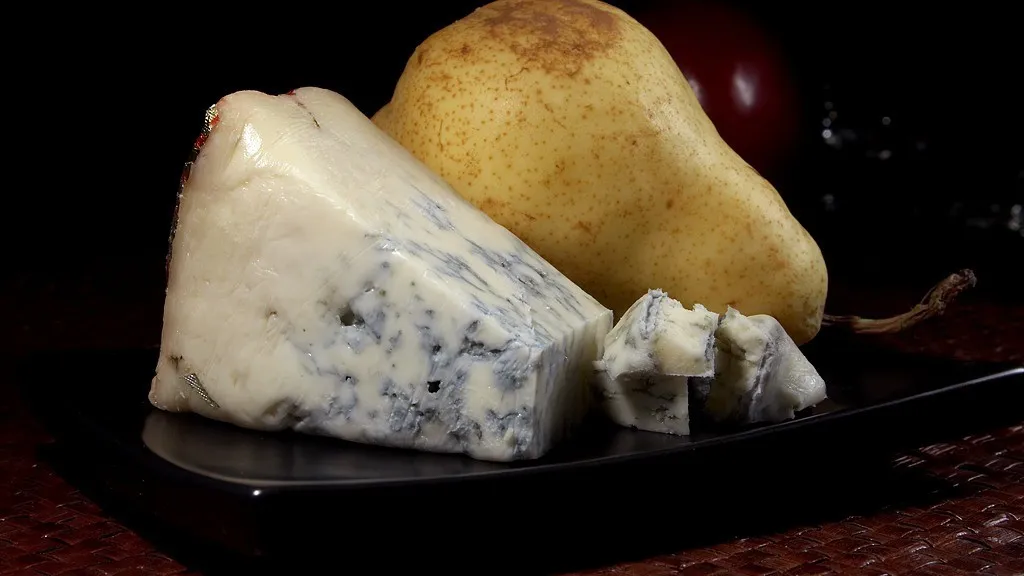
Imagine a world where everyone is an expert in a different cheese, yet no one knows how to pair them, or even notices when one has gone bad.
That is how skyscrapers of knowledge end up built on foundations of fog.
We are often told that specialization broadens our horizons. And within a single field, it does. But when every path leads deeper into the same narrow ground, something is quietly lost. Specialization channels us, standardizes us, and slowly makes us interchangeable: predictable and useful within our lane, yet strangely helpless the moment a problem refuses to stay inside it.
The Age of the Blind Expert
This is what fragmentation does to a mind.
It produces blind experts, incapable of seeing beyond the borders of their own domain. It is like knowing every room of a house yet never having seen it from the street.
The more we know within our narrow fields, the less capable we seem of navigating the complexity of the real world, where problems never arrive neatly labeled by department. And cheeses, to continue the metaphor, are rarely meant to be enjoyed on their own.
Extreme specialization promises progress. More often, it produces a sophisticated form of ignorance: we know everything about our tiny piece of the puzzle, yet we have lost the map that shows where it belongs.
And there is a quiet cost to this. When you only ever know your own function, it becomes hard to picture how the whole fits together, or to imagine that it might fit differently.
The answer is not to reject expertise. It is to reclaim the right to intellectual curiosity across disciplines, and to ease the friction that keeps us from reaching the seemingly useless, the unexpected connection, the open channel to another field.
Ancient wisdom understood this well: fragmented knowledge is lifeless knowledge. The great thinkers of the past were natural philosophers, artist-scientists, poet-mathematicians. Not because they lacked depth, but because they recognized that reality is woven from connections invisible to the specialist’s microscope.
An expert who never leaves their own discipline is like a cheesemonger who knows everything about Roquefort yet has never tasted wine. The expertise is real. The judgment, without enough context, is not.
Regaining the ability to “pair the cheeses” takes a small, everyday discipline:
Cultivate curiosity and venture beyond your own field. Speak with people whose work is nothing like yours. Practice the art of analogy. Learn to express your own discipline in plain language.
And remember that we are human beings before we are professionals. No specialist, however brilliant, is free from error. I have never met anyone who never made a mistake, and I have made plenty myself.
What makes a team resilient is not the absence of mistakes, but the presence of complementary perspectives and mutual checks. You notice what I overlook; I recognize patterns invisible to you. The value is not only in the redundancy that ensures safety, but in the mutual correction of the larger picture.
We often celebrate individual expertise while overlooking something even more valuable: the channels through which expertise flows. Information does not become understanding simply because it is shared. It becomes understanding only when another mind can receive it without distortion.
Knowledge Against Resistance
The real world makes this unavoidable. Hard problems do not respect academic departments or professional silos. They cut straight across them, and they are often hardest precisely where the boundaries lie.
Nowhere is this clearer than in an investigation.
An investigation is, in the end, the acquisition of knowledge against an antagonistic constraint: someone has worked to keep that knowledge from you.
The trail is fragmented on purpose, the channels deliberately broken, the cheeses scattered so that no single nose can pair them. To reconstruct what someone has labored to hide, you must move across the very domains they counted on staying separate.
This tells us something about knowledge itself.
We assume that because information is abundant, knowledge is too. It is not. Knowledge behaves like a material. It has structure, density, friction, and scarcity. Access to information does not automatically grant access to knowledge, just as owning bricks does not teach you how to build a cathedral.
One thinker who put this well was Gurdjieff. He argued that knowledge is not an infinite common resource. It exists in finite quantities, concentrated in particular places, moments, and relationships. It must be acquired, not merely accessed.
Navigation in the Era of AI
This distinction becomes even more critical in the age of AI.
AI drastically lowers the cost of obtaining answers, but it does not lower the cost of asking the right questions. It accelerates retrieval and pattern-matching, but it inherits the very corpus fragmentation it was trained on.
Information is abundant. Knowledge is scarce.
Anyone can ask an AI a question. Expertise is knowing whether the question is even worth asking, or merely misleading.
As answers become increasingly abundant, good questions become increasingly scarce.
As Umberto Eco (whose legacy I luckily caught a glimpse of through his student, my semiotics professor) often argued: culture is not the accumulation of information. It is the ability to navigate it, to know where to look, how to evaluate what we find, and how to connect it into understanding.
The Architecture of a Team
This is why assembling a team is not simply a matter of gathering the best specialists. A team is an architecture of knowledge. Each person holds a different fragment, but value emerges only when those fragments become connected.
The bridge itself is knowledge, and has to be shared to work.
Not the specialists. Not the information they possess. The bridge that allows one domain to reach another without distortion, without translation loss, without filters.
The highest-leverage nodes are often the translators, the synthesizers, the boundary-spanners: the ones who can move between domains with minimal distortion. They reduce friction and catch blind spots, and out of those connections, understanding finally emerges.
Knowledge does not merely reside in people. It resides in the bridges between them.
Specialists collect cheeses. Great teams learn how to pair them.
Next: Episode #7: Achilles Catches the Tortoise Where It Has to Stop